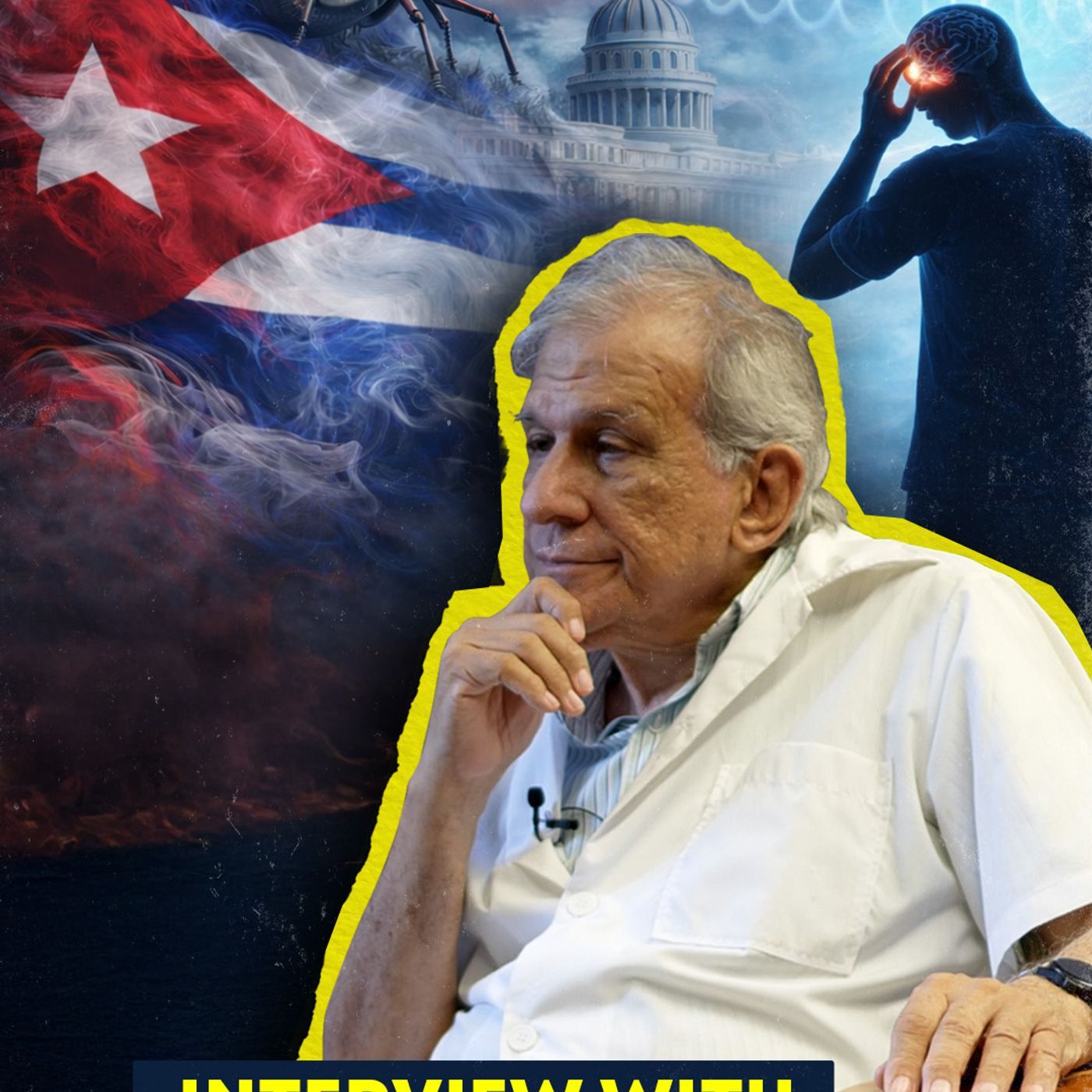
Interview with Mitchell Valdés Sosa, Director of Cuba’s Neuroscience Centre
Cuba AnalysisPlay episode
Show notes
Leading Cuban neuroscientist, Mitchell Valdés Sosa joins Cuba Analysis to discuss Cuba’s commitments to sovereignty, socialism and science. He explains how the National Centre for Scientific Research, founded by Fidel Castro in 1965, trained Cubans in biomedical sciences, and incubated multiple research and development centres, including the Neuroscience Centre that he directs. Cuba’s unique state-founded, state-owned biotechnology sector, organised today under BioCubaFarma, emerged from this process in the 1980s.
Valdés Sosa outlines the ‘grand strategy’ behind Cuba’s investment in education and science, and the creation of ‘full cycle’ research centres that combine basic research, production, and foreign trade. He argues that this socialist model, free from speculative private interests, allows the sector to prioritise public health, produce affordable medicines, and tackle neglected diseases that big pharma ignores, including meningitis B in Africa.
We discuss recent crises in which Valdés Sosa played a key role: the US allegations of ‘sonic attack’ on diplomats in Havana during the first Trump administration, and the COVID-19 pandemic. Having investigated the US accusation, he provides a scientific rebuttal of the so-called ‘Havana Syndrome’, highlighting the lack of medical evidence - a conclusion subsequently reached by US intelligence agencies – and the political motivations behind them. He describes how during COVID-19 the Neuroscience Centre pivoted to manufacture medical ventilators and swabs in collaboration with international partners, to circumvent US sanctions.
Valdés Sosa describes the suffocating impact of the US blockade on Cuba’s medical science sectors, from obstructing access to equipment, spare parts, databases, and bank transactions, to ‘invisible mechanisms’ to scare off scientific partners. It is a ‘crime against Cuba’, he says, designed to strangle the economy and overthrow a system whose example of successful social policies the US establishment fears.
Looking to the future, we discuss Cuba’s three innovative treatments in the pipeline for Alzheimer’s, a disease that will affect 30 million people globally by 2030. Most advanced is NeuroEPO, which has shown extremely promising results in clinical trials, with very few side effects and should be available to Cuban patients in 2026.
YouTube: https://www.youtube.com/watch?v=myc4iAXuoWs