
Trending in Fabregas Le Métis Noir’s World
Latest Single
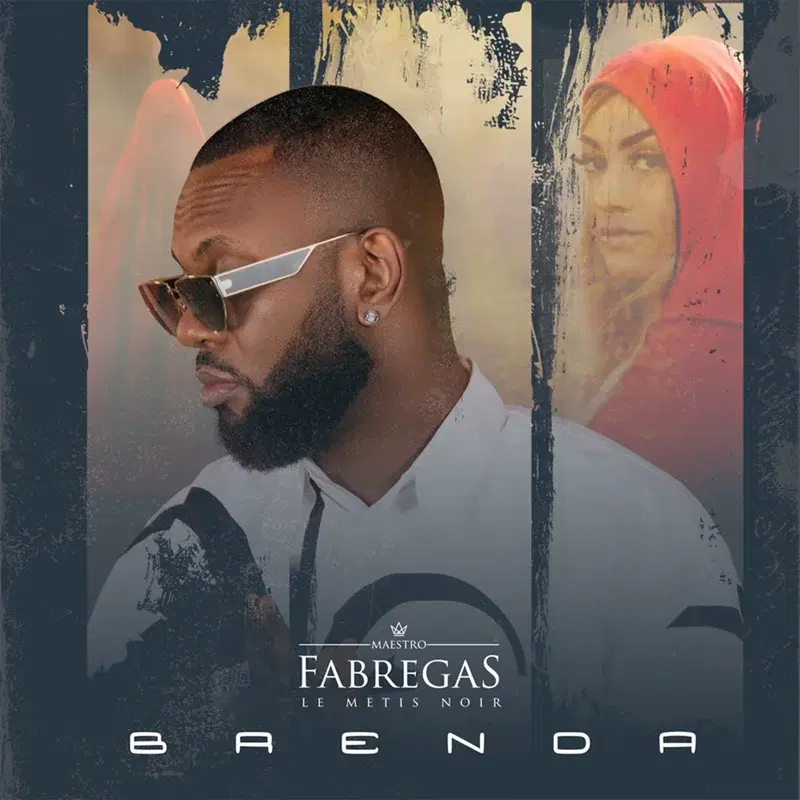
Brenda
Released Feb 12, 2021
Trending Globally
No trending songs available.
Single
Story
Quick Facts
Born
1987
1987
From
Congo (Democratic Republic of the)
Congo (Democratic Republic of the)
Journey
Fabregas Le Métis Noir is a Congolese singer, songwriter, dancer, and producer whose career reflects the development of modern rumba and ndombolo in the Democratic Republic of the Congo. Rising from modest beginnings in Kinshasa, he gradually established himself as one of the prominent figures of a younger generation of artists who carried Congolese music into the twenty-first century. Over the years, he progressed from singing in church and performing in neighborhood groups to joining a major Congolese orchestra and eventually creating his own label and band. His journey illustrates the changing structure of the Congolese music industry, where artists increasingly combine performance, production, and entrepreneurship while maintaining strong connections with audiences both in Africa and within diaspora communities.
Fabregas grew up in a family with five children and encountered music at a young age. One of his first musical experiences took place in the Catholic parish of Saint Alphonse, where he participated in the church choir. Singing in this environment allowed him to perform publicly while still a student and helped nurture his confidence as a vocalist.
The stage name “Fabregas” reportedly emerged from a casual moment among friends. During one rehearsal, he arrived wearing the jersey of Spanish footballer Cesc Fàbregas, who was then playing for Arsenal. The nickname began as a joke but gradually stuck, eventually becoming the name under which he would build his professional career.
His earliest participation in popular music came through local groups in his neighborhood. Around 2002 and 2003, he joined a street collective known as Rue de Son.
A major turning point arrived in 2007 when he auditioned for Wenge Musica Maison Mère, the well-known orchestra led by Werrason. During the audition, he performed the song “Azmak,” which impressed the band’s leader and earned him a position within the group. Joining the orchestra provided him with a far larger platform and introduced him to the professional world of touring, recording, and large-scale performances. While he was a member of Wenge Musica Maison Mère, he participated in several projects released during that period, including Temps Présent: Mayi ya Sika in 2008, Techno Malewa Sans Cesse in 2009, the maxi single Diata Bawu in 2011, and Techno Malewa Sans Cesse Suite & Fin later the same year.
The group appeared at the Zénith de Paris in 2008 and again in 2010, exposing him to audiences within the Congolese diaspora. In 2011, he participated in the large “Nuit Africaine” event at the Stade de France, where numerous African performers shared the stage. Within the orchestra, his reputation grew particularly after he performed the song “Diego Music,” which became one of the notable tracks associated with the album Techno Malewa Sans Cesse.
After several years within Wenge Musica Maison Mère, Fabregas began moving toward an independent career. In 2012, he released his first solo album, Amour Amour. The project marked his official debut as a solo artist and included the song “Bololé,” which attracted attention among listeners in the Congolese music community. His profile increased further with the release of the EP Anapipo in 2014. One of its tracks, “Mascara (Ya Mado),” became widely popular and was accompanied by a dance known as “Ya Mado,” which spread quickly among fans and dancers in both Africa and diaspora communities.
Seeking greater independence, Fabregas established the label Wanted Records in 2015. The label provided him with a platform to release his own music while also managing artistic projects more directly. Around the same time, he created the orchestra Light Music Villa Nova, which became the ensemble accompanying him in recordings and performances. The group quickly developed a dedicated fan base, with supporters often referring to themselves as “Les Villageois.” Through these structures, he gained increased control over production, touring, and artist development.
Throughout the following decade, he continued building a growing discography. His studio releases include Amour Amour (2012), the Amour Amour Collector Edition in 2013, the Anapipo project in 2014, Je Pense: Poison & Antidote in 2016, and Cible: Mise à Jour in 2019. In 2023, he released the album Gomme, his first major studio project in several years following Cible: Mise à Jour. The twelve-track release continued his exploration of modern rumba arrangements combined with contemporary production techniques.
Over the course of his career, Fabregas has recorded numerous songs that circulated widely through Congolese media and digital platforms. Among the best known are “Mascara (Ya Mado),” “Tengana,” “Ozana (Bénissez vos jaloux), among many others.
He has received recognition from Congolese music award platforms such as the Ndula Awards and has accumulated millions of views across online video platforms.
Live performance remains a central part of his work. Fabregas frequently tours internationally, particularly in Europe, where large Congolese diaspora communities maintain a strong interest in rumba music. One notable appearance took place at the Casino de Paris. The concert attracted a diverse audience and demonstrated the continued appeal of Congolese music beyond the African continent.
Within the contemporary Congolese music scene, he is often referred to by the nickname “Le Maestro,” a title used by supporters and commentators alike. His fan community, commonly called “Villageois,” reflects the identity associated with his orchestra Light Music Villa Nova. Many observers place him among the generation of artists who followed the wave of performers connected to the Wenge musical movement, including figures such as Fally Ipupa and Ferre Gola.
By the mid-2020s, Fabregas continued to remain active in the music industry, regularly releasing new material, performing internationally, and managing his label Wanted Records while leading the Light Music Villa Nova orchestra Project.